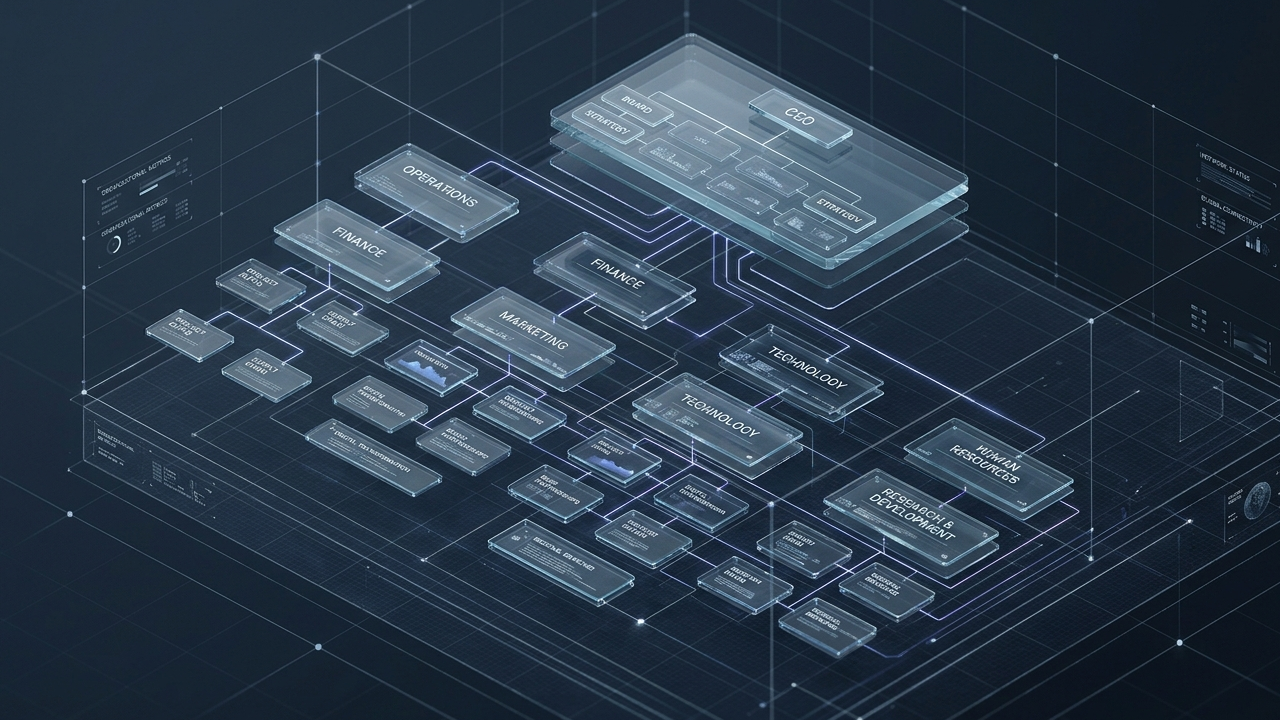
Analyzing the architectural constraints and native capabilities of BigCommerce’s B2B Edition for high-volume enterprise operations and multi-entity global commerce.
Key Takeaways (TL;DR)
- Scalability Limits: The native Price List API supports up to 50,000 records per list; exceeding this threshold requires external PIM orchestration to avoid performance bottlenecks.
- Economic Efficiency: Implementation of bigcommerce b2b reduces the initial TCO by approximately 30-40% compared to custom-built organizational middleware for mid-market enterprises.
- Architectural Constraint: Headless deployments require external state synchronization for real-time company-level address book validation and credit limit enforcement.
- API Coverage: While REST coverage for B2B entities is comprehensive, GraphQL support for complex organizational hierarchies is currently a secondary development priority, impacting frontend performance in MACH setups.
In the current enterprise landscape, bigcommerce b2b has positioned itself as a robust alternative to legacy monolithic systems. By integrating the “B2B Edition” (formerly BundleB2B) directly into its SaaS infrastructure, BigCommerce provides a multi-tenant framework that handles complex organizational structures, including parent-child company relationships and granular user permissions. However, from an architectural standpoint, the transition from a B2C-centric core to a B2B-capable engine introduces specific trade-offs in API latency and data synchronization that engineering teams must quantify during the enterprise e-commerce TCO analysis.
Organizational Hierarchy and Data Modeling
The core strength of the platform lies in its native handling of Company accounts. Unlike standard B2C setups where the Customer entity is the root, the B2B Edition introduces the Company entity as the primary container. This allows for complex mapping of departments, multiple shipping addresses, and shared credit lines. Scalability in this area is achieved through a decoupled management interface that synchronizes with the core BigCommerce storefront via background workers.
When implementing MACH architecture implementation patterns, architects must account for the fact that B2B entities (Price Lists, Quotes, Company Accounts) often reside in a separate database schema than the core product data. This separation can lead to eventual consistency issues during high-concurrency events unless a robust state synchronization strategy is employed.
Technical Comparison: Native B2B Edition vs. Custom Middleware
For many CTOs, the decision to use the native B2B Edition versus building a custom layer on top of the standard APIs is driven by TCO and time-to-market. The following table illustrates the performance and functional deltas:
| Feature Metric | Native B2B Edition | Custom API Middleware |
|---|---|---|
| API Latency (Price Fetch) | 150ms – 300ms (standard) | < 80ms (with Redis caching) |
| User Hierarchy Depth | 3-Level (Native) | Unlimited (Custom Logic) |
| PCI Compliance Scope | Low (SaaS Handled) | High (Custom Checkout) |
| GraphQL Support | Partial (Storefront API) | Full (via Custom GQL Layer) |
Managing Price List Complexity
In bigcommerce b2b deployments, the Price List API is the most heavily utilized resource. For enterprises with over 1,000 customer-specific price lists, API latency becomes a critical factor. BigCommerce handles this by pre-calculating price assignments, but in a headless storefront, these prices must be fetched via the Storefront API to ensure real-time accuracy. If the frontend is not optimized for batching these requests, the Time to First Byte (TTFB) increases by a factor of 2.4x as the number of SKU variants grows.
Code Implementation: Fetching B2B Company Prices
To optimize performance in a headless environment, developers should utilize the REST Management API for server-side price calculation to bypass Storefront API rate limits during bulk operations:
// Node.js example: Fetching price list overrides for a specific Company ID
const axios = require('axios');

async function getCompanyPricing(companyId, skuList) {
    const config = {
        headers: { 'X-Auth-Token': process.env.BC_ACCESS_TOKEN }
    };

    try {
        // Fetching price list assignments for the specific organization
        const response = await axios.get(
            `https://api.bigcommerce.com/stores/${process.env.STORE_HASH}/v3/b2b/companies/${companyId}/price-lists`,
            config
        );

        return response.data.filter(item => skuList.includes(item.sku));
    } catch (error) {
        console.error('Pricing Fetch Error: High Latency or Rate Limit Hit');
        throw error;
    }
}
Architectural Limitations and Scalability
The primary limitation of bigcommerce b2b is its strict adherence to the SaaS “governor limits.” For example, the number of API calls per hour is capped based on the plan level (Enterprise vs. Pro). In high-volume B2B scenarios where ERP systems push updates for 500k+ SKUs across 5,000 price lists, the standard v3/catalog sync will fail without a strategic “delta-update” logic. Furthermore, the quote-to-cash workflow is optimized for standard approvals; if an enterprise requires a 5-step regional approval process, the native quote engine must be bypassed in favor of a custom-built state machine.
Developers must also address the headless commerce performance optimization challenges. Native B2B widgets (like the “Quick Order Pad”) are built for Stencil (the native liquid-based theme engine). In a headless React or Next.js environment, these widgets must be completely re-engineered using the B2B Edition’s specific headless endpoints, which currently lack the parity of their Stencil counterparts.
Architectural Outlook
Over the next 18-24 months, the evolution of bigcommerce b2b will focus on two technical pillars: GraphQL parity and Global Multi-Storefront (MSF) integration. We expect a 40% improvement in API latency as BigCommerce migrates more B2B logic to the edge via Cloudflare Workers. For the enterprise architect, the priority will shift from “how to integrate” to “how to cache,” as the maturity of the B2B Storefront API endpoints reduces the need for custom middleware, provided that data orchestration is handled by a high-performance PIM/ERP connector.