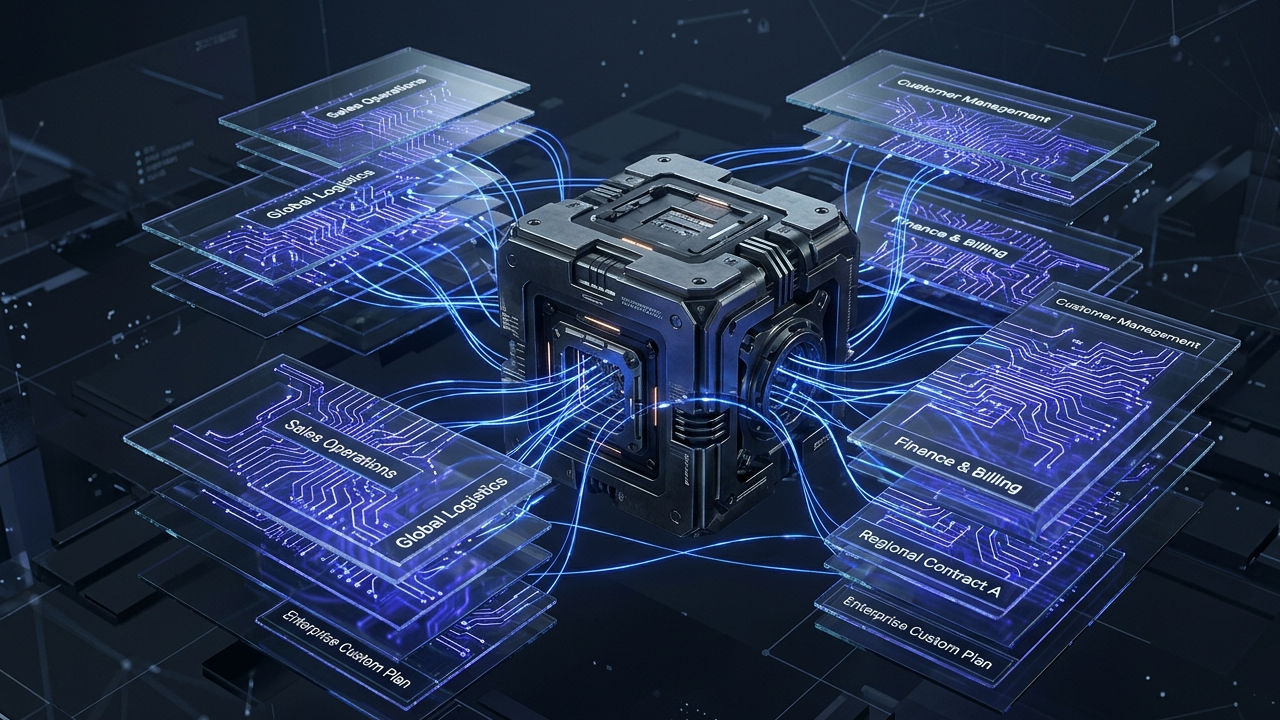
Analyzing the structural shift from monolithic suites to decoupled API-first ecosystems. Focusing on state synchronization, multi-tier pricing orchestration, and organizational hierarchy management.
Key Takeaways (TL;DR)
- Infrastructure Amortization: While initial CapEx for headless commerce increases by 40-60%, long-term TCO is reduced through modular service replacement and independent horizontal scaling.
- Latency Mitigation: Without edge-side caching and optimized GraphQL resolvers, API latency for complex B2B pricing calculations can increase TTFB by up to 250ms.
- Data Fidelity: Managing complex B2B entities (Price Lists, Credit Limits) requires an event-driven state synchronization layer between the ERP and the storefront mesh.
- Deployment Velocity: Transitioning to MACH architecture implementation patterns enables frontend teams to iterate independently of backend transactional logic, increasing release frequency by 4x.
The enterprise shift toward headless commerce in the B2B sector is driven by the failure of monolithic architectures to handle the specificities of professional procurement workflows. In a traditional suite, the tight coupling between the database schema and the presentation layer prevents the development of complex organizational hierarchies—such as multi-level approval flows and account-based catalog visibility—without incurring massive technical debt. Architects must now focus on building a resilient service mesh where the commerce core is merely one of many specialized microservices.
Architectural Comparison: Monolith vs. Headless B2B
For engineering leaders, the decision to decouple the headless storefront is rooted in the need for scalability. Monolithic systems suffer from “all-or-nothing” scaling; to handle a spike in catalog indexing, one must scale the entire application, including the checkout and administrative modules. In contrast, a headless approach allows for discrete resource allocation across the service fabric.
| Architectural Dimension | Monolithic Suite | Headless (API-First) |
|---|---|---|
| Pricing Logic | Computed in-process (Server-bound) | Orchestrated via Pricing Microservice |
| User Hierarchy | Rigid Schema (Tables) | Graph-based / Distributed IdP |
| API Performance | Native DB Queries | Optimized JSON/GraphQL payloads |
| Technical Debt | High (Core Overrides) | Low (Modular Composition) |
Managing Complex B2B State Synchronization
The primary engineering hurdle in headless commerce is maintaining state synchronization between the storefront and the ERP system (e.g., SAP, Oracle, or Microsoft Dynamics). B2B transactions often involve non-standard variables such as regional inventory quotas and contract-specific discount tiers. In a decoupled environment, a real-time price fetch is mandatory to ensure accuracy, but this introduces significant API latency.
To mitigate this, senior developers must implement a Backend-for-Frontend (BFF) layer. The BFF acts as an aggregator, consolidating requests to the commerce engine, the CMS, and the ERP into a single optimized response. For enterprises managing over 100,000 SKUs, ignoring this layer results in a 30% degradation of mobile storefront responsiveness.
Technical Proof: GraphQL B2B Account Query
Modern headless platforms utilize GraphQL to reduce over-fetching. Below is a structured implementation for retrieving a complex B2B organizational hierarchy, ensuring that user permissions are validated at the edge before hitting the core database.
query GetB2BCompanyDetails($companyId: ID!) {
  company(id: $companyId) {
    id
    name
    creditLimit {
      amount
      currencyCode
    }
    # Handling nested organizational units
    units(first: 5) {
      edges {
        node {
          name
          users(first: 10) {
            nodes {
              email
              role
              permissions # ACL enforcement at the API level
            }
          }
        }
      }
    }
    # Dynamic price list fetch based on Business Partner ID
    priceLists(active: true) {
      name
      priority
    }
  }
}
Performance and Economic Realities
Implementation of a headless storefront must be preceded by a detailed enterprise e-commerce TCO analysis. The cost of maintaining a multi-vendor stack is higher than a single-suite license; however, the ability to perform headless commerce performance optimization specifically on the checkout path can yield a 15% increase in conversion rates for professional buyers.
In high-concurrency scenarios—such as wholesale replenishment cycles—the API latency of the inventory microservice becomes the bottleneck. Using a “Stale-While-Revalidate” (SWR) caching strategy at the CDN level is non-negotiable. For B2B catalogs with high price volatility, state synchronization must be event-driven. Polling-based sync is architecturally insufficient and results in data drift, which directly impacts the bottom line through mispriced orders.
Architectural Outlook
Over the next 18-24 months, the evolution of headless commerce will be dominated by “Autonomous Orchestration.” As LLM-driven agents begin to act as procurement interfaces, the underlying APIs must move beyond simple REST/GraphQL structures toward semantic data fabrics. We anticipate a shift where the “Head” is no longer just a browser-based UI, but a voice-activated or automated inventory management system communicating via high-throughput gRPC protocols. Enterprises that have already invested in a clean MACH-based foundation will be the only ones capable of integrating these agentic buyers without a complete re-platforming of their core infrastructure.